Barrett's Esophagus
From the هضم DIGEST medical team · GI, liver and endoscopy · Riyadh
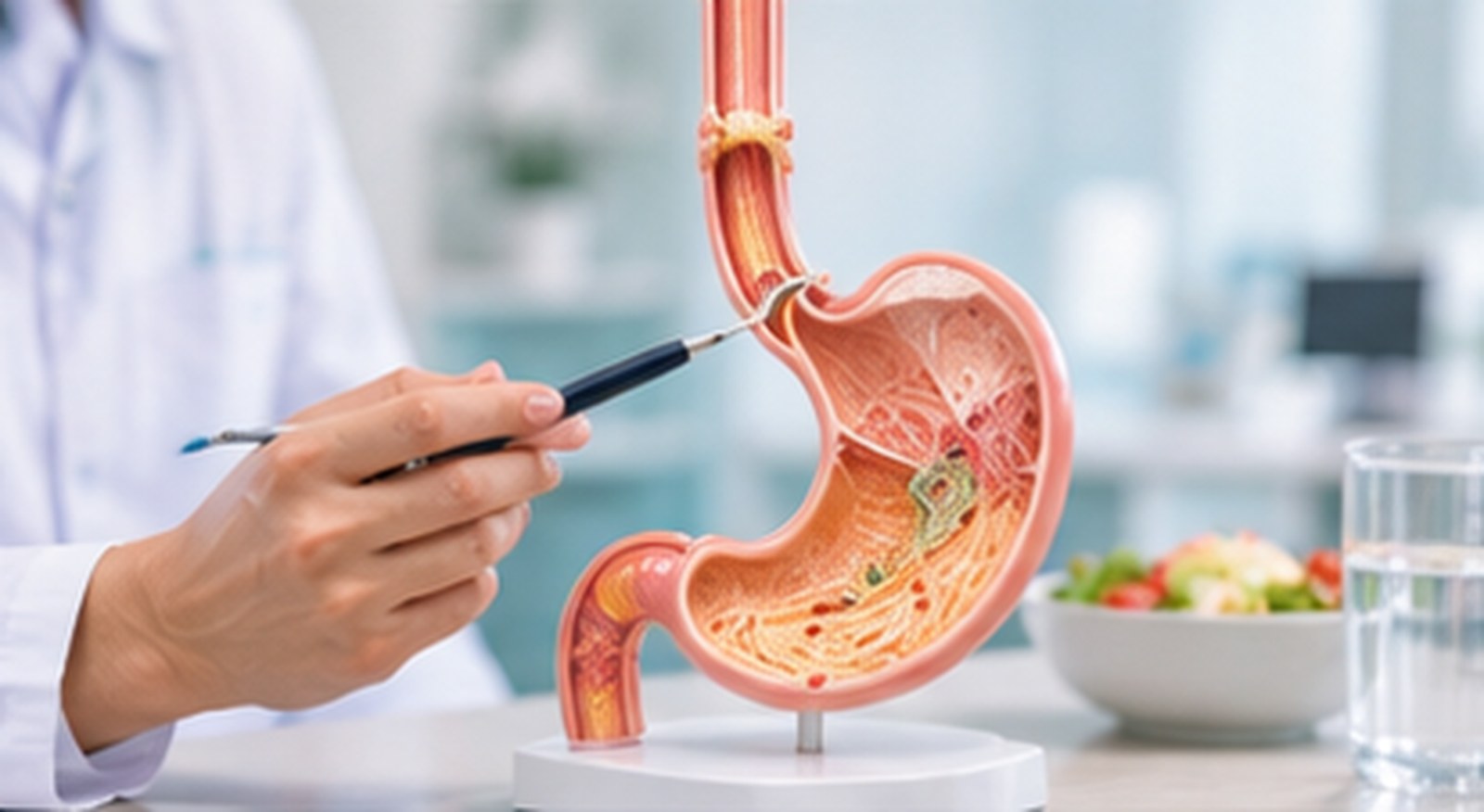
Overview
Barrett's esophagus is a condition where the normal lining of the esophagus changes to resemble the lining of the intestine — usually as a result of long-standing acid reflux (GERD). It is important because it slightly increases the risk of esophageal adenocarcinoma. Most people with Barrett's esophagus never develop cancer, but regular monitoring is essential.
Symptoms
Barrett's itself causes no specific symptoms
Frequent heartburn (underlying GERD)
Difficulty or pain with swallowing
Chest pain
Regurgitation of food or sour liquid
Common Causes
Long-standing GERD (≥5 years)
Age over 50
Male sex
Obesity (especially central)
Smoking
Family history of Barrett's or esophageal cancer
Self-Care Tips
Control GERD aggressively with prescribed proton-pump inhibitors (PPIs)
Maintain a healthy weight
Quit smoking
Attend scheduled surveillance endoscopy — usually every 3–5 years
Eat smaller meals and avoid lying down after eating
Discuss radiofrequency ablation or endoscopic therapy if dysplasia is found
When to See a Doctor
If you have had GERD for more than 5 years and have never had an endoscopy, speak with a gastroenterologist about screening. Report any new difficulty swallowing or unexplained weight loss immediately.
How Barrett's esophagus is diagnosed
Barrett's esophagus is diagnosed by upper endoscopy. The doctor sees that the normal pale lining of the lower esophagus has been replaced by salmon-colored tissue, and takes biopsies to confirm the change and check for dysplasia, which means abnormal cells that carry a higher risk of cancer. Careful, systematic biopsies by an experienced endoscopist matter because dysplasia can be patchy.
Treatment and surveillance
Reflux is controlled with acid-reducing medicine, usually a proton pump inhibitor, together with lifestyle measures. Most people with Barrett's esophagus never develop cancer, so the main plan is regular surveillance endoscopy with biopsies, with the interval set by the length of the segment and biopsy results. If dysplasia is found, treatments done through the endoscope, such as endoscopic resection and radiofrequency ablation, can remove the abnormal tissue, often without surgery.
Frequently Asked Questions
What is Barrett's esophagus?
Does Barrett's esophagus turn into cancer?
Who is at risk of Barrett's esophagus?
How often do I need an endoscopy with Barrett's esophagus?
Can Barrett's esophagus be treated or reversed?
Share this with someone who needs it:
Have questions or need a consultation?
Our GI specialists are ready to help you
Same-week appointments · WhatsApp replies during working hours