🔬What is it?
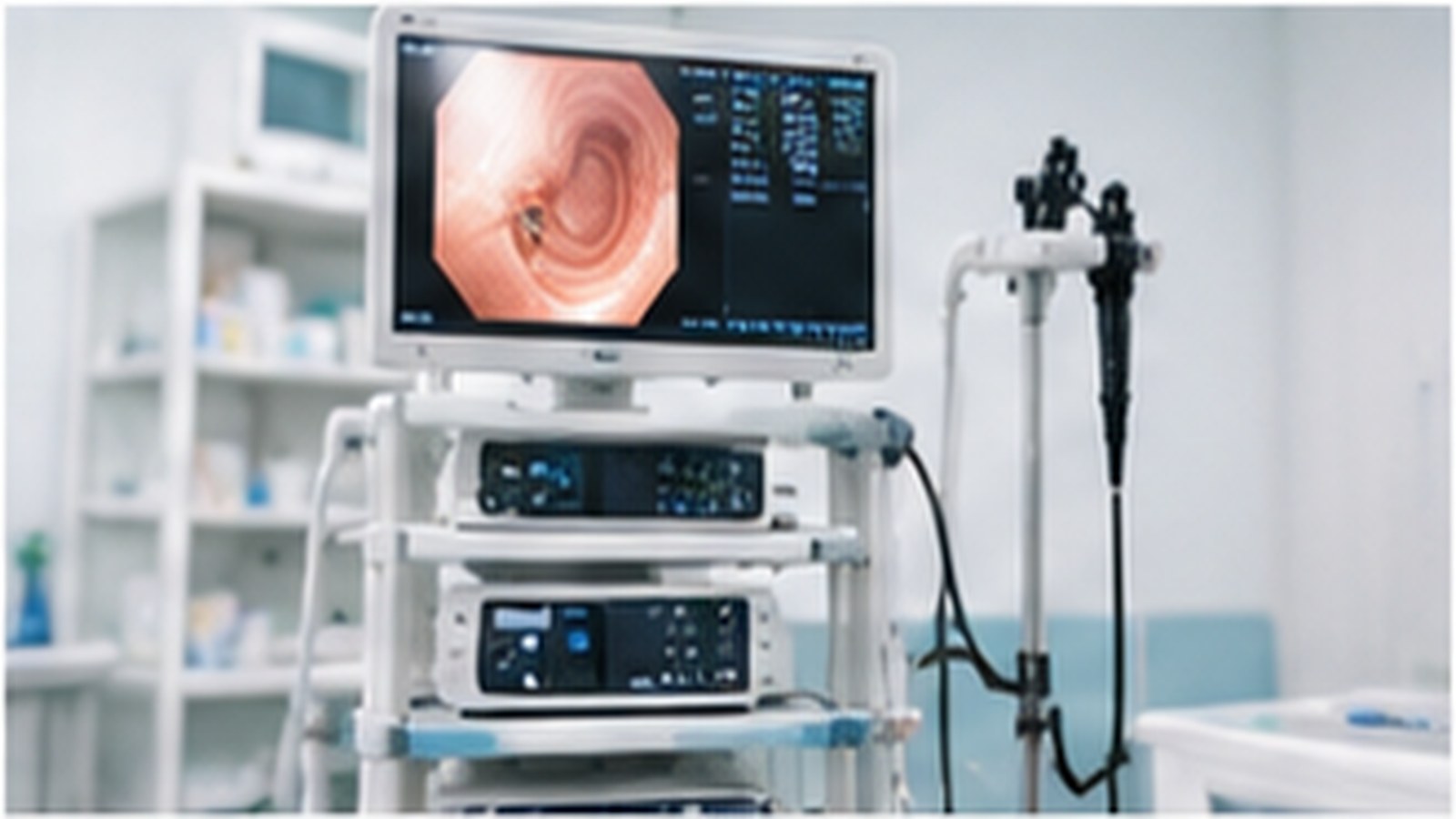
Gastroscopy, also called upper endoscopy or EGD, lets the doctor look directly at the lining of your food pipe (esophagus), stomach and the first part of the small intestine. A thin, flexible tube with a light and a tiny camera is passed gently through the mouth, and the images appear live on a screen. It shows inflammation, ulcers, bleeding points, narrowing and early changes that scans often miss.
💡Why might you need it?
Gastroscopy is recommended for persistent heartburn or reflux, difficulty or pain when swallowing, ongoing upper abdominal pain, nausea or vomiting that does not settle, unexplained weight loss, anaemia, black stools or vomiting blood. It is also used to test for H. pylori, to look for coeliac disease, to check for varices in liver disease and to follow up conditions such as Barrett's esophagus. Finding a problem early usually means simpler treatment.
⚙️How does it work?
- You are checked in, your medical history and medicines are reviewed, and a small cannula is placed in your arm
- Your throat may be numbed with a spray and you receive sedation so you feel relaxed and comfortable
- You lie on your left side and the doctor passes the endoscope gently through the mouth; it does not block your breathing
- The doctor examines the esophagus, stomach and duodenum and takes small tissue samples (biopsies) if needed, which is painless
- The scope is withdrawn and you rest in the recovery area until the sedation wears off
⏱️Duration
10–20 minutes (about 1–2 hours including recovery)
📋How to prepare?
- ✓Fast as instructed (usually 6–8 hours without food and 2 hours without clear fluids, unless told otherwise)
- ✓Tell us about blood thinners, diabetes medicines, allergies and any heart or lung condition beforehand
- ✓Arrange for someone to take you home and avoid driving until the next day
📝What to expect?
- •You will need to fast, usually for 6–8 hours, so the stomach is empty and the view is clear
- •Most people feel little or nothing during the procedure because of the sedation
- •Afterwards you may have a mild sore throat or feel a little bloated for a few hours
- •You will need a responsible adult to take you home and you should not drive for the rest of the day
- •The doctor explains what was seen straight after, and biopsy results follow in a few days
👥Who is it for?
- ✓People with heartburn or reflux that is frequent, severe or not improving with medicine
- ✓Anyone with trouble or pain swallowing, or food that feels stuck
- ✓Those with ongoing upper abdominal pain, nausea or vomiting
- ✓People with unexplained weight loss, anaemia, black stools or vomiting blood
- ✓Patients with liver disease needing a check for varices, or follow-up of Barrett's esophagus
🛡️Safety & risks
- •Gastroscopy is a very safe procedure, and serious complications are uncommon
- •A sore throat and mild bloating for a few hours are common
- •Rarely there can be bleeding after a biopsy or a small tear (perforation) of the wall
- •Sedation can occasionally cause breathing or heart-rhythm problems, so we monitor you throughout
- •Contact us urgently for severe chest or abdominal pain, fever, vomiting blood or black stools after the procedure
📄Results & next steps
The doctor tells you what was seen straight after the procedure once you are awake. If biopsies were taken (for example for H. pylori or coeliac disease), results usually come within a few days and the doctor explains the next steps.
❓Frequently asked questions
Is gastroscopy painful?
Most people feel little or nothing because of the sedation. Afterwards you may have a mild sore throat or feel bloated for a few hours, which settles by itself.
How long do I need to fast before an upper endoscopy?
Usually about 6–8 hours without food, and clear fluids are often allowed until 2 hours before. Follow the exact instructions you are given, especially if you have diabetes or take blood thinners.
Can I drive or go to work after a gastroscopy?
No, not on the same day, because of the sedation. Arrange for someone to take you home. Most people return to normal activity and work the next day.
What can a gastroscopy find?
It can show inflammation of the esophagus or stomach, ulcers, H. pylori-related changes, hiatal hernia, narrowing, polyps, bleeding points, Barrett's esophagus and signs of coeliac disease. Biopsies can be taken during the same procedure.
When should I have an upper endoscopy for heartburn?
See a doctor if heartburn occurs more than twice a week, does not improve with treatment, or comes with trouble swallowing, vomiting, weight loss, anaemia or black stools. Your doctor will decide whether an endoscopy is needed.