Difficulty Swallowing (Dysphagia)
From the هضم DIGEST medical team · GI, liver and endoscopy · Riyadh
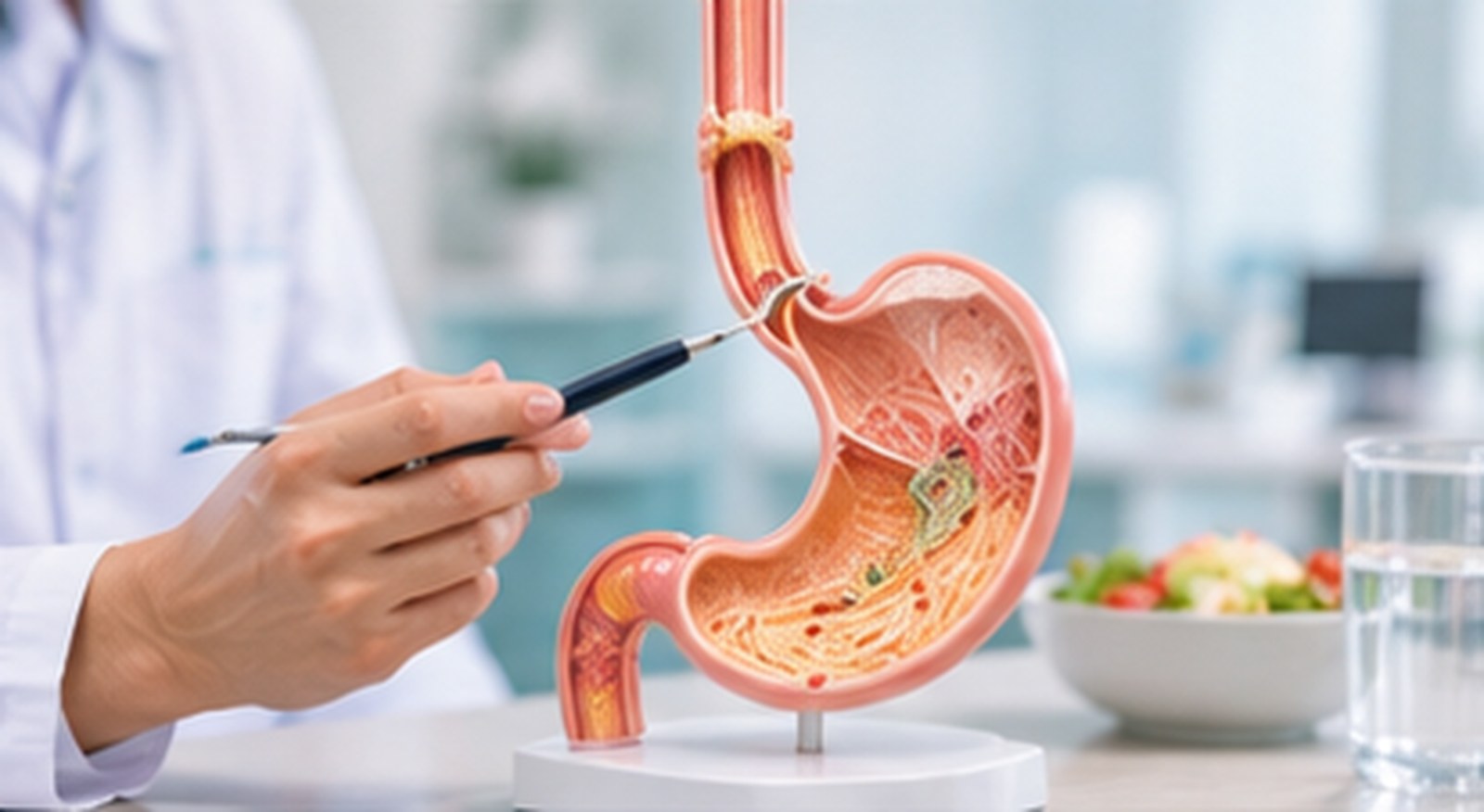
Overview
Dysphagia means difficulty swallowing — food or liquid takes extra effort or time to move from your mouth to your stomach. It can feel like food is stuck in your throat or chest. While occasional difficulty is usually nothing to worry about, persistent dysphagia needs evaluation as it may indicate an esophageal or neurological condition.
Symptoms
Feeling of food stuck in throat or chest
Pain while swallowing
Coughing or choking when eating or drinking
Needing to cut food into smaller pieces
Weight loss from eating less
Regurgitation of food
Common Causes
GERD causing esophageal narrowing
Eosinophilic esophagitis
Esophageal motility disorders (achalasia)
Esophageal stricture
Esophageal cancer
Neurological conditions
Self-Care Tips
Eat slowly and chew food thoroughly
Take smaller bites
Sit upright while eating
Stay hydrated — drink water with meals
Avoid eating before bed
Avoid very hot or very cold foods if they trigger symptoms
When to See a Doctor
See a doctor promptly if you have progressive difficulty swallowing, food gets stuck regularly, you're losing weight, or if difficulty swallowing is a new symptom — especially in adults over 45.
Why swallowing becomes difficult
Difficulty swallowing is called dysphagia. Doctors separate it into two types. Oropharyngeal dysphagia starts in the mouth and throat: food will not start down, you cough or choke when swallowing, or liquids go down the wrong way. It is often caused by stroke, Parkinson's disease or other nerve and muscle problems. Esophageal dysphagia is the feeling of food sticking in the chest after it has been swallowed. Common causes include acid reflux with narrowing, eosinophilic esophagitis, rings and webs, motility disorders such as achalasia, and tumors.
Where you feel the food stick, whether it is solids only or solids and liquids, and whether it is getting worse, all help the doctor find the cause.
When to be checked and what to expect
Do not ignore swallowing difficulty that lasts more than a couple of weeks. See a doctor soon if you are losing weight, food repeatedly sticks, you are vomiting food, or you have chest pain, anemia or black stools. Go to the emergency department if food is stuck and you cannot swallow saliva, or if you cannot breathe properly.
The usual first test is an upper endoscopy, which looks at the esophagus directly, allows biopsies and can stretch a narrowing at the same time. Depending on what is found, the doctor may add a barium swallow, esophageal manometry, or a swallowing study with a speech and swallowing therapist.
Frequently Asked Questions
What causes difficulty swallowing?
Why does food get stuck in my chest when I swallow?
Is difficulty swallowing a sign of cancer?
When should I go to the emergency room for swallowing problems?
Which doctor should I see for swallowing difficulty?
Share this with someone who needs it:
Have questions or need a consultation?
Our GI specialists are ready to help you
Same-week appointments · WhatsApp replies during working hours
Related Articles
Heartburn & Acid Reflux
Heartburn is a burning feeling in your chest, behind the breastbone. It happens when stomach acid flows back up into your esophagus (food pipe). Occasional heartburn is common, but frequent heartburn (more than twice a week) may be a sign of GERD (gastroesophageal reflux disease).
Upper Endoscopy (EGD) Preparation
An upper endoscopy (also called EGD or gastroscopy) is a 10–15 minute procedure where a thin, flexible camera is passed through the mouth to examine the esophagus, stomach, and the first part of the small intestine (duodenum). It's used to investigate heartburn, swallowing problems, abdominal pain, anemia, or suspected ulcers — and it can take biopsies to test for H. pylori, celiac disease, or pre-cancerous changes (Barrett's esophagus). You'll be sedated through an IV and feel almost nothing.